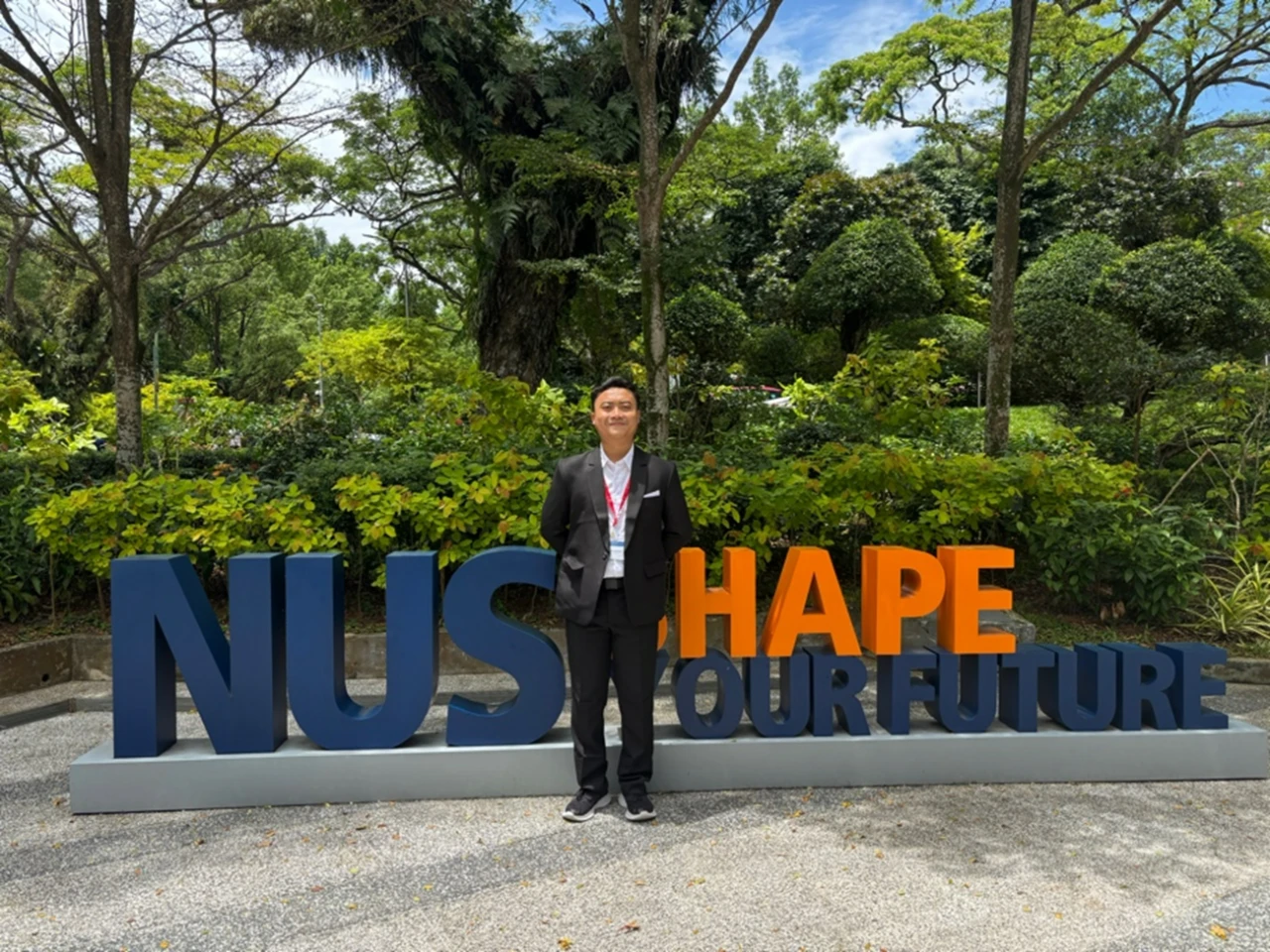
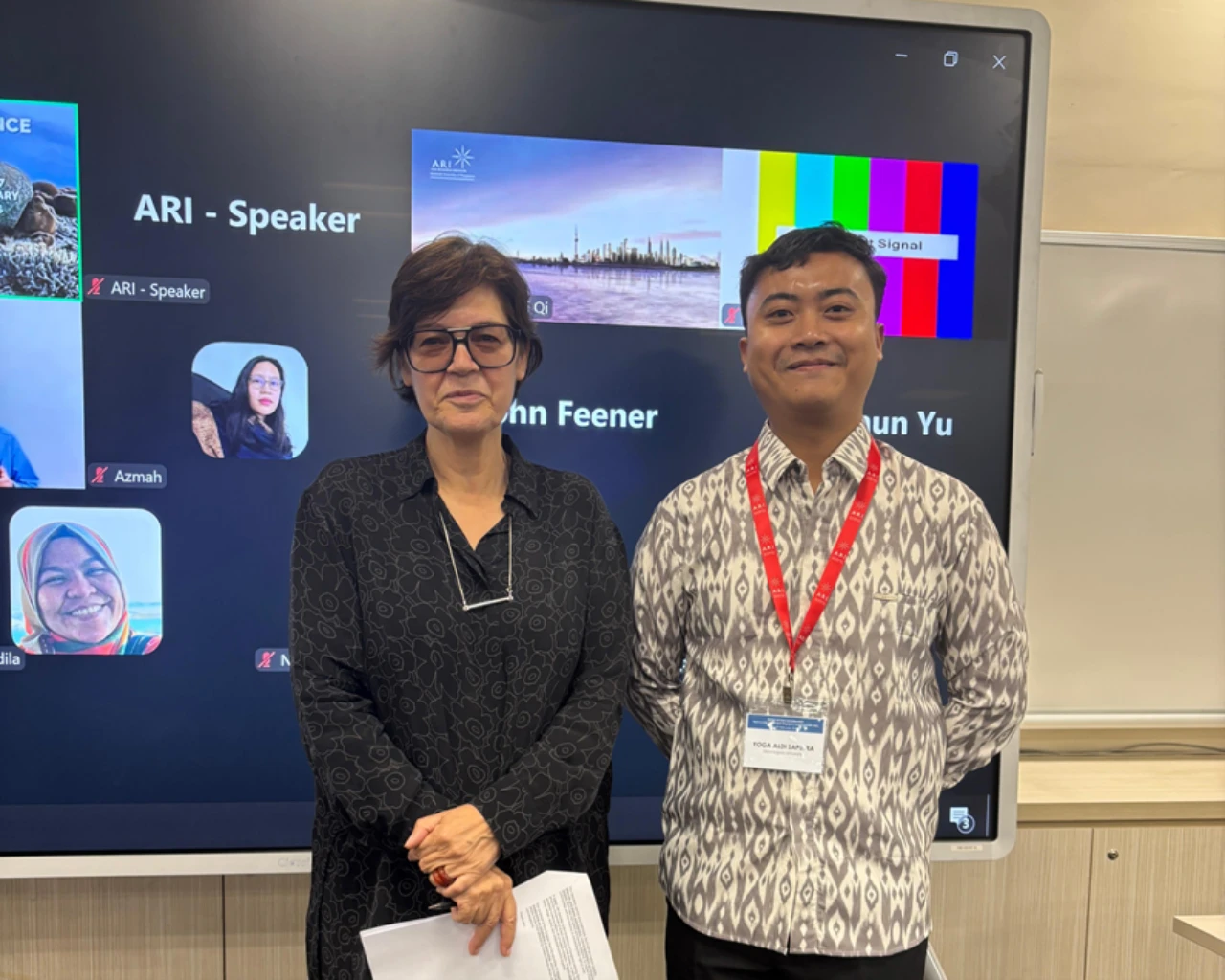
Singapore, February 26–27, 2026 – Yoga Aldi Saputra, S.A.P., MPA, a lecturer from the Department of Public Administration, Faculty of Social and Political Sciences (FISIP), Diponegoro University, was one of the presenters at the international workshop forum titled “Doing Ocean Governance: Approaches in and from Singapore and Southeast Asia,” held at the National University of Singapore (NUS), Singapore.
This academic event brought together researchers and academics from various countries to discuss critical approaches to ocean governance, particularly in the Southeast Asian context. The workshop was organized by the Asia Research Institute, NUS, and featured presenters from renowned universities worldwide, such as the University of British Columbia, the University of Cambridge, Nanyang Technological University, and various institutions across Asia and Australia.
 |
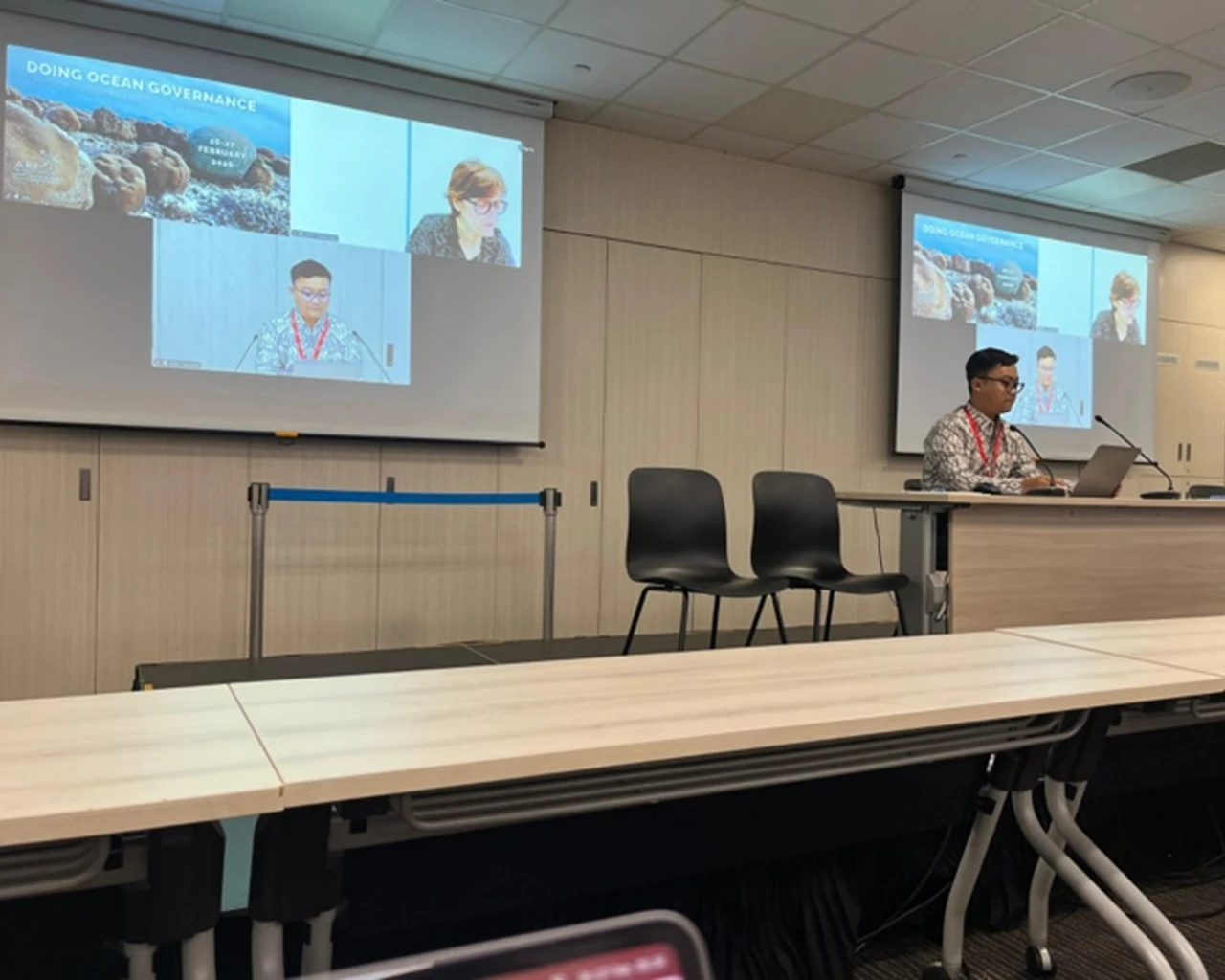 |
At the forum, Yoga Aldi Saputra presented a paper entitled “Vernacular Ocean Governance and the Epistemologies of Crisis: Rethinking Coastal Management in Rembang, Indonesia” in Panel 4: Regimes of Marine Conservation. The research presented addressed the issue of coastal degradation in Rembang Regency, Central Java, as a reflection of the disparity between national ocean governance policies and the ecological realities of local communities. This study highlighted the problems of massive abrasion, marine pollution from domestic waste and the fish processing industry, and their impacts on the sustainability of coastal community livelihoods.
Through a qualitative approach involving field observations, in-depth interviews, and thematic analysis, this research found that the shift in marine management authority through Law No. 23 of 2014, which transferred authority from the district to the provincial level, had widened the gap between policy design and ecological conditions at the local level. In this situation, coastal communities developed informal governance mechanisms based on cultural and spiritual practices, such as the Sedekah Laut tradition, which views the sea as a moral entity and living space, not merely an economic resource.
This participation affirms the contribution of FISIP Undip academics to the global discourse on environmental governance and coastal management based on local wisdom. This forum also served as a strategic space to introduce the Indonesian perspective in international debates on more contextual, inclusive, and locally-informed ocean governance. Yoga Aldi Saputra’s participation in this forum simultaneously strengthens Diponegoro University’s position as a higher education institution actively contributing to the development of public policy and sustainable environmental governance at both the regional and global levels.